
Teeth or no teeth, that is the question

The cetacean group includes all species of whales, dolphins and porpoises. There are over 90 different species of cetacean in the world – ranging from the tiny endangered vaquita to the largest animal to ever live on the planet, the blue whale. These species are split into two different subgroups – the toothed whales and the baleen whales.
Bristly baleen
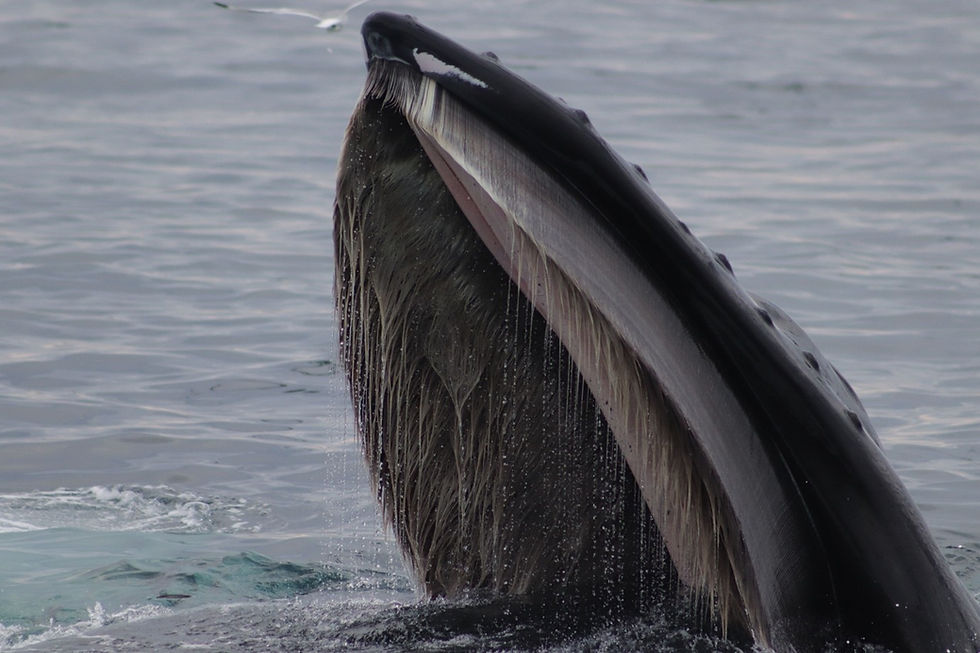
The baleen whale group (Mysticeti) includes a lot of the larger species such as the humpback whale and right whales. What makes these guys special is that they don’t have any teeth! Instead, these species have baleen plates that hang down from their upper jaw. The plates are made from keratin – the same substance that human hair and fingernails are made from. While feeding, the baleen acts like a filter or a strainer. When the whale dives under the water, they open their mouth wide and take a massive mouthful of water and fish, krill or plankton. The whales don’t want to swallow all that salt water, so they push their tongue to the roof of their mouth, forcing all the water out through their baleen strainers and trapping their prey. They can then just swallow all that yummy fish or krill whole!
Tough teeth
Despite the maybe misleading name, the toothed whale group (Odontoceti) includes all the whales with teeth but all the dolphins and porpoises too. This includes larger species with teeth like the beaked whales and sperm whales. The size, shape and configuration of these teeth vary between species depending on what prey they eat. Some species have very special tooth formations that they use to compete for mates. For example, narwhals are famous for their large tusk that can reach up to 3 metres long. This tusk is actually a huge protruding canine tooth!

Echolocation and more!
As well as what’s in their mouths, there are some other differences between the baleen and toothed whale groups. One major difference is how the cetaceans find their food. Toothed cetaceans have evolved to use echolocation to detect where their prey is. In a similar way to bats, odontocetes produce clicks using phonic lips in their blow holes. These sounds are amplified and directed using a special organ in their foreheads, called a melon. The clicks then travels through the water until it hits something like a fish. The echo of the sound will then bounce back and travel to the cetacean. The sound then travels through the lower jawbone of the cetacean and into the inner ear. With these sounds, the whale can build up a pretty accurate picture of what’s around them. However, baleen whales don’t have the ability to use echolocation and it’s still a mystery to scientists how they are able to find their prey.

On the whole, baleen whales are more solitary while toothed whales often travel and live in pods or groups. It varies from species to species but these pods are often family groups. Another difference that has evolved between the two groups is that the bigger baleen whales have two blow holes, but the toothed whales and dolphins only have one. All the cetaceans evolved from land mammals with two nostrils and as they evolved to start living back underwater, their nostrils slowly shifted to the top of their heads to make breathing at the surface easier. As the tooth whales evolved away from their baleen whale cousins, their nostrils fused into one blowhole at the same time that they were developing the ability to echolocate.
The four common species that we see on our tours are harbour porpoises, white-beaked dolphins, minke whales and humpback whales. The porpoises and dolphins fit into the toothed whale group while the minkes and humpbacks are baleen whales. Depending on their feeding strategy, we can sometimes watch the baleen plates of the minkes and humpbacks as they lunge out of the water after their prey and see a pod of white-beaked dolphins corralling the fish in a feeding frenzy. No matter the method, all our cetaceans seem to enjoy the bay buffet!
Emily Erskine


Comments